The Grand River valley cuts right through Cambridge, and that means the subsurface is unpredictable. You get layers of silty clay, pockets of organic material, and dense till all within the same lot. Standard drilling alone can miss those transitions. Our approach uses the CPT test to capture a continuous profile of the soil. We see the exact boundary between the soft alluvium and the competent Halton Till underneath. This matters for foundation design. It matters for settlement calculations. And it matters for your budget. We combine this with in-situ permeability testing when groundwater is a factor, and liquefaction screening if the site is near the river. For years, Cambridge builders have relied on our data to avoid surprises during excavation. We operate cone rigs that can access tight residential lots in Hespeler, Preston, and Galt without tearing up the lawn.
In Cambridge's Grand River valley, a CPT test reveals the true boundary between soft alluvium and dense glacial till. That boundary defines your foundation cost.
Scope of work in Cambridge Ontario
Critical ground factors in Cambridge Ontario
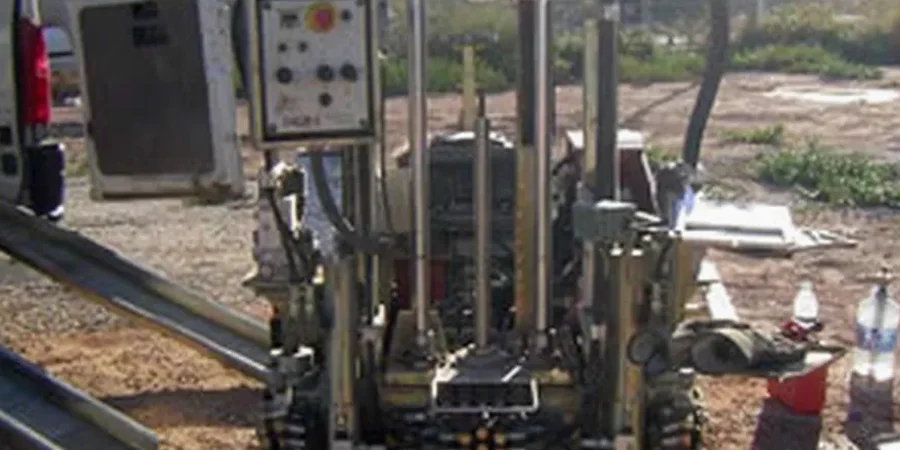
Our CPT rig is a 20-ton truck-mounted unit with a hydraulic pushing system. It advances a 15 cm² cone at a constant 2 cm per second. No drilling mud. No cuttings. Just a clean penetration record. The biggest risk we manage is refusal on boulders or dense till. Cambridge has plenty of both, especially in the drumlin fields east of the river. When the cone hits refusal, we stop immediately. We don't risk damaging the equipment or biasing the data. In those cases, we recommend a combined approach: CPT for the softer upper soils and SPT drilling to characterize the harder material below. This gives you a complete profile without compromising accuracy. We also watch pore pressure dissipation closely in the low-permeability clays common in the Hespeler area. Rushing that test yields useless consolidation parameters. We take the time it needs.
Our services
Every site in Cambridge has its own history. Maybe it was farmland. Maybe it was a mill site along the Speed River. Our CPT services are designed to answer the specific questions your project raises.
Seismic CPT (SCPT)
We add a geophone module to the cone string. At every meter, we pause and measure the shear wave velocity. This gives you the small-strain stiffness (Gmax) and a direct VS30 profile for seismic site classification per NBCC. Faster than a separate MASW survey, and the data is co-located with your stratigraphy.
Piezocone with Dissipation Testing
We push the cone to a target depth and then hold it. The pore pressure decay curve tells us the coefficient of consolidation and hydraulic conductivity of the clay. This is critical for estimating settlement rates in the Champlain Sea sediments that appear in parts of Cambridge. No lab consolidation test can give you this in-situ reality.
Common questions
What does a CPT test cost for a typical residential lot in Cambridge?
For a standard residential investigation in Cambridge, a CPT test typically ranges from CA$210 to CA$330 per sounding point, depending on depth and whether you need pore pressure dissipation data. Most single-family home sites require one to three points. We provide a firm quote after reviewing the site location and access conditions.
How deep can you push the cone in Cambridge soils?
Our 20-ton rig can reach 25 to 30 meters in the soft to firm clays and silts common along the Grand and Speed Rivers. Penetration stops at refusal, which in Cambridge often occurs on the dense Halton Till or limestone bedrock. We typically achieve 15 to 20 meters before refusal in the drumlin areas.
Do I still need a borehole if I get a CPT test done?
CPT gives you a continuous strength and stratigraphy profile without samples. However, for environmental assessment or visual classification, you may still want a borehole. We often recommend a complementary test pit or single borehole to ground-truth the CPT data and collect samples for Atterberg limits if the project involves deep excavations.
How soon do we get the CPT report after the field work?
We deliver the CPT data in PDF format within 48 hours of completing the field work. The report includes corrected cone resistance, friction ratio, pore pressure, and soil behavior type logs. For projects requiring interpreted engineering parameters like undrained shear strength and equivalent SPT N-values, we include those in the same report. Rush delivery is available.