Cambridge sits at the confluence of the Grand and Speed Rivers, where alluvial deposits and glacial till create a complex hydrogeological profile that standard lab tests simply cannot capture. With a population approaching 150,000 and ongoing expansion in the Preston and Hespeler areas, developers frequently encounter groundwater conditions that demand precise field data before shoring or foundation work begins. A Lefranc or Lugeon test measures hydraulic conductivity directly within the formation, accounting for fractures, lenses, and anisotropy that remolded samples miss entirely. For projects near the river corridors or within the Waterloo Moraine recharge zone, this in-situ approach provides the permeability values required by Ontario Regulation 903 and local conservation authority permits.
A single Lugeon test in fractured dolostone reveals more about groundwater control needs than a dozen lab permeameter runs on intact core samples.
Scope of work in Cambridge Ontario
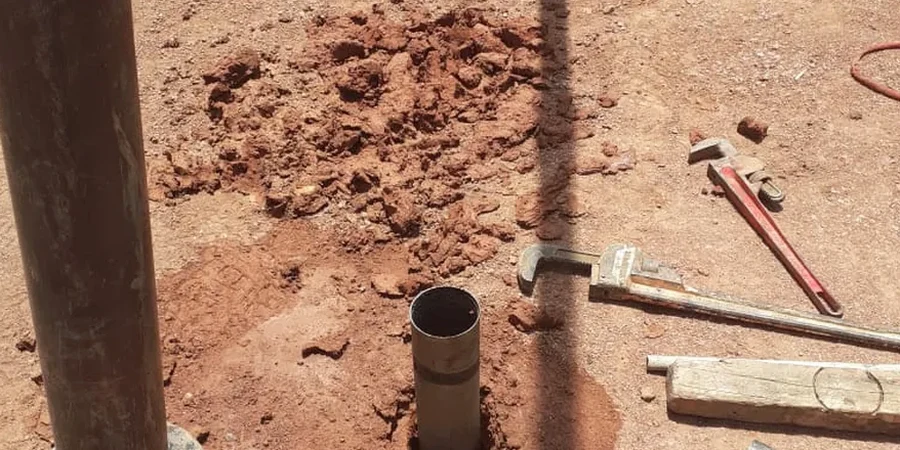
Critical ground factors in Cambridge Ontario
The Waterloo Moraine and adjacent river valleys produce groundwater tables that fluctuate over two meters seasonally, and Cambridge's industrial legacy means buried fill and contaminated plumes are not uncommon in redevelopment zones. Running a Lefranc test in a poorly developed borehole can underestimate permeability by an order of magnitude if the sidewall is smeared, while Lugeon tests misinterpreted at a single pressure may confuse scour with true hydraulic conductivity. Errors in these measurements cascade into undersized dewatering systems, excessive seepage into deep excavations, or failed infiltration galleries for stormwater management—all of which carry significant cost and schedule impacts under the Ontario Building Code's geotechnical requirements.
Our services
Field permeability programs in Cambridge are designed around the specific geological unit encountered, whether it's dense Halton Till, outwash sand, or fractured Paleozoic bedrock. Every test is executed with a dedicated packer system and calibrated flow meters to maintain the accuracy required by environmental site assessments and dam safety reviews.
Lefranc Variable-Head Testing in Overburden
Conducted in soil boreholes at depths specified by the site investigation plan, this method uses a slotted casing section to isolate the test interval. Data reduction follows Hvorslev's equations, correcting for casing geometry and filter pack properties to yield a point value of hydraulic conductivity representative of the native formation.
Lugeon Packer Testing in Bedrock
A single or double packer isolates a bench of rock core, and water is injected in five sequential pressure steps, typically 25-50-75-50-25 kPa per meter of overburden pressure. The resulting Lugeon pattern—whether laminar, turbulent, dilation, washout, or void filling—guides grouting decisions and excavation support design for shafts and bridge piers.
Common questions
When does a Cambridge project need a Lugeon test instead of a Lefranc test?
The Lugeon test is specified when bedrock is encountered within the planned depth of influence, typically the dolostone and limestone of the Guelph and Salina formations common under Cambridge. The Lefranc test applies to soil overburden—till, sand, or gravel—where packers cannot effectively seal against the borehole wall. Many projects require both, separated by the overburden-bedrock interface logged during drilling.
How long does a single field permeability test take to complete?
A single Lefranc test at one depth typically requires 45 to 90 minutes, including stabilization time for the water level. A full five-stage Lugeon test in rock takes roughly two to three hours per interval, depending on the fracture response and the time needed to reach steady flow at each pressure step. Program duration scales with the number of test intervals specified in the hydrogeological investigation.
What is the typical cost range for field permeability testing in Cambridge?
For projects in Cambridge, Lefranc and Lugeon testing typically ranges from CA$880 to CA$1,620 per test interval, depending on depth, access conditions, and whether a drilling rig is already mobilized on site. A formal quotation is prepared after reviewing the borehole plan and expected lithology.
Can permeability test results be used directly for dewatering system design?
Yes, the hydraulic conductivity values obtained from Lefranc and Lugeon tests feed directly into analytical and numerical groundwater models—such as MODFLOW or SEEP/W—used to size well points, deep wells, or eductor systems. The key is ensuring the test interval matches the aquifer unit targeted for dewatering, which our technical team verifies against the borehole log before testing begins. More info.