Slopes and walls represent a critical intersection of geotechnical engineering and structural design, particularly in a city like Cambridge, Ontario, where the landscape is defined by river valleys, glacial deposits, and ongoing urban development. This category encompasses the analysis, design, and stabilization of both natural and engineered earth structures, including retaining walls, reinforced slopes, and excavation support systems. The primary goal is to manage lateral earth pressures, prevent soil movement, and ensure the long-term safety of adjacent properties and infrastructure. For a municipality bisected by the Grand and Speed Rivers, the integrity of these systems is not merely a construction requirement but a fundamental aspect of public safety and environmental protection.
The local geology of Cambridge presents specific challenges that make professional slope and wall design indispensable. The area is underlain by a complex overburden of glacial till, including the Port Stanley Till, which is a silty clay to clayey silt matrix with varying amounts of stone and boulder content. This is often interbedded with glaciofluvial sand and gravel deposits, creating stratified soil conditions with contrasting permeability and strength characteristics. These conditions are highly susceptible to erosion, particularly along riverbanks, and can experience significant reductions in shear strength when saturated. A thorough slope stability analysis must account for these local soil stratigraphies, groundwater fluctuations, and the potential for softening of the weathered till crust.
Any work involving slopes and walls in Cambridge must strictly adhere to the Ontario Building Code (OBC), which references national geotechnical standards. The design process is governed by the Canadian Foundation Engineering Manual (CFEM) and CSA Group standards, which mandate limit states design principles for ultimate and serviceability conditions. For retaining structures over one meter in height or those supporting surcharges, a professional engineer licensed in Ontario must seal the design. Furthermore, projects within regulated areas administered by the Grand River Conservation Authority (GRCA) require additional permits to ensure that slope interventions do not negatively impact floodplain dynamics, erosion hazards, or the region's sensitive cold-water fisheries and wetland habitats.
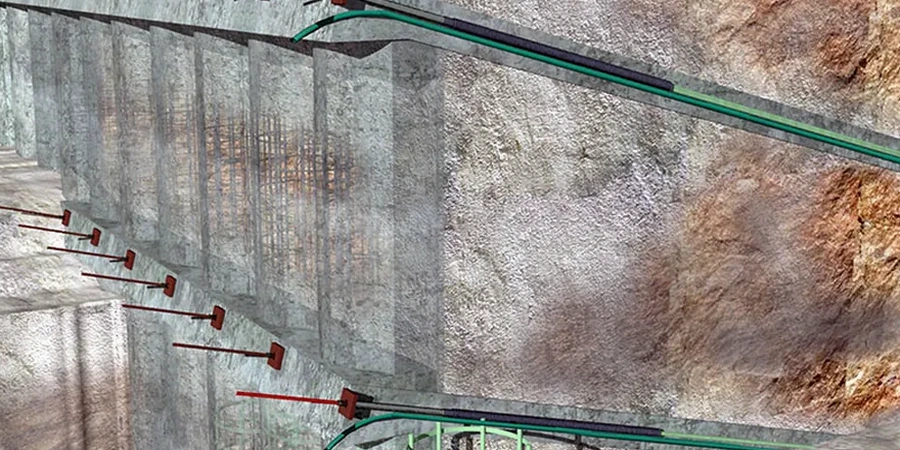
The types of projects that necessitate this specialized expertise are diverse and growing as Cambridge intensifies development within its established urban boundary. Deep basements for multi-story residential buildings in the Galt core require robust excavation support, often utilizing active/passive anchor design to tie back soldier pile walls in tight urban sites where conventional sloping is impossible. Elsewhere, the creation of level building pads on the city's rolling topography demands permanent retaining wall design, which can range from large-scale mechanically stabilized earth (MSE) walls for commercial plazas to gravity stone walls for residential landscaping. Transportation corridors and bridge approaches along Highway 8 also present ongoing needs for reinforced soil slopes and noise barrier foundations that must maintain stability under dynamic loading.
Common questions
What is the difference between a retaining wall and a slope stabilization project?
A retaining wall is a rigid structure designed to hold back a soil mass at a near-vertical angle, artificially creating a grade change. Slope stabilization, however, involves reinforcing an existing natural or engineered slope to prevent mass movement, often through regrading, drainage improvements, or soil nailing, without necessarily constructing a vertical wall face.
When is a building permit required for a retaining wall in Cambridge, Ontario?
Under the Ontario Building Code, a building permit is typically required for retaining walls exceeding one meter in height, measured from the bottom of the footing to the top of the wall. Additionally, any wall supporting a surcharge, such as a driveway or building, requires professional engineering design and a permit, regardless of its height.
How do local soil conditions in Cambridge affect the lifespan of a retaining wall?
Cambridge's prevalent silty clay tills are frost-susceptible and can retain significant moisture, leading to increased lateral earth pressures during freeze-thaw cycles. Without proper drainage design, including granular backfill and weep holes, hydrostatic pressure can build up behind the wall, causing cracking, leaning, or premature failure within a few seasonal cycles.
What role does the Grand River Conservation Authority play in slope and wall projects?
The GRCA regulates development within floodplains, valleys, and wetlands. If your property is within a regulated area, you will need a permit from the GRCA in addition to a city building permit. They assess whether the proposed slope or wall work will negatively impact flood conveyance, erosion patterns, or the ecological integrity of the river corridor.