Cambridge's industrial growth along the Speed and Grand Rivers left a legacy of challenging ground conditions. The historic textile mills and foundries that shaped Preston and Galt were built where water power was easy, which means the soil beneath many redevelopment sites is a mix of loose alluvial sands and silty fill. A standard approach to foundations in these areas often falls short. The team here deals with this reality every week using vibrocompaction design that accounts for the stratified overburden typical of Waterloo Region. Before finalizing a foundation plan, we typically recommend checking the grain size distribution with a grain-size analysis to confirm whether the target soils will respond effectively to vibratory densification.
Real-time compaction data lets us fine-tune the grid right on site, skipping the guesswork and cutting down on over-processing.
Scope of work in Cambridge Ontario
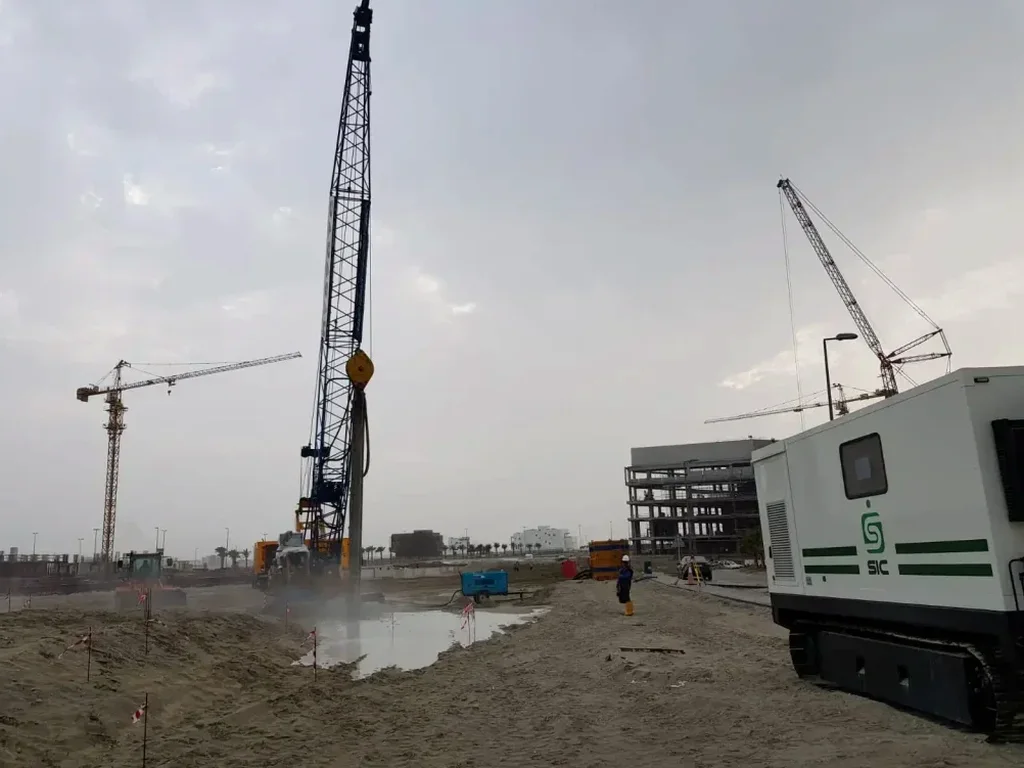
Critical ground factors in Cambridge Ontario
Winters in Cambridge hit hard enough to freeze the top meter of soil, and the spring thaw turns silty sites into a soft mess. Vibrocompaction design here has to account for seasonal groundwater fluctuation; a design that looks solid in August can underperform in April if the water table rises into the treatment zone. The Grand River valley also carries seismic risk from the Western Quebec Seismic Zone, though it's moderate, it is real. Loose sands that are not densified can lose strength during a long-period event. We specify post-treatment verification with CPT soundings to confirm that the improved ground meets the liquefaction resistance target, referencing the NCEER/Youd-Idriss framework where applicable.
Our services
We package vibrocompaction design with the specific testing needed to close out a project in Cambridge. The two core services below cover most industrial and commercial building sites.
Vibrocompaction Trial Program and Design
We lay out a test section on your site, run the vibrator at varying spacing and frequency, and log the energy consumption. The design report includes a final grid, depth criteria, and a verification testing plan tied to your structural loads.
Post-Treatment CPT Verification
Using electric cone penetration testing before and after treatment, we map the increase in tip resistance and sleeve friction. The before-and-after comparison gives the geotechnical engineer of record clear evidence that the performance spec has been met.
Common questions
What does vibrocompaction design cost for a typical site in Cambridge?
For a standard industrial lot in Cambridge, a vibrocompaction design package including a trial program and verification plan runs between CA$2,290 and CA$6,590. The spread depends on the grid size, depth to competent bearing, and how many CPT soundings are needed for the performance report.
How deep can the vibrator reach in the glacial soils around Cambridge?
In the sandy outwash and till deposits common here, the electric vibrator can treat down to about 30 meters. The actual limit on your site depends on the presence of cobbles or boulders in the till; we review the geotechnical baseline report to flag any refusal risk before mobilizing.
How do you confirm the ground improvement worked?
We run CPT soundings at the same locations before and after treatment. The increase in cone tip resistance directly correlates with the rise in relative density. We also compare the results against the liquefaction resistance target specified in the design report.