A six-storey mixed-use project near Hespeler Road taught us everything about Cambridge's hidden subsurface challenges. The borehole logs showed 3.7 meters of soft silty clay over dense Halton Till, and the water table sat barely 1.2 meters below grade during spring melt. The structural engineer initially specified isolated pad footings, but differential settlement estimates exceeded 25 millimeters across the footprint. We shifted to a rigid raft foundation design using modulus of subgrade reaction values back-calculated from our CPT testing campaign, which gave us continuous tip resistance and pore-pressure data through the compressible layer. The mat thickness ended up at 750 millimeters with two-way shear reinforcement at column junctions, and post-construction surveys confirmed total settlement under 8 millimeters after the first heating season. In this part of Waterloo Region, where glaciolacustrine deposits dominate the upper profile, raft systems are not an upgrade—they are often the only rational solution.
In Cambridge's Grand River corridor, a properly designed mat foundation converts differential settlement from a structural risk into a controlled, uniform deformation.
Scope of work in Cambridge Ontario
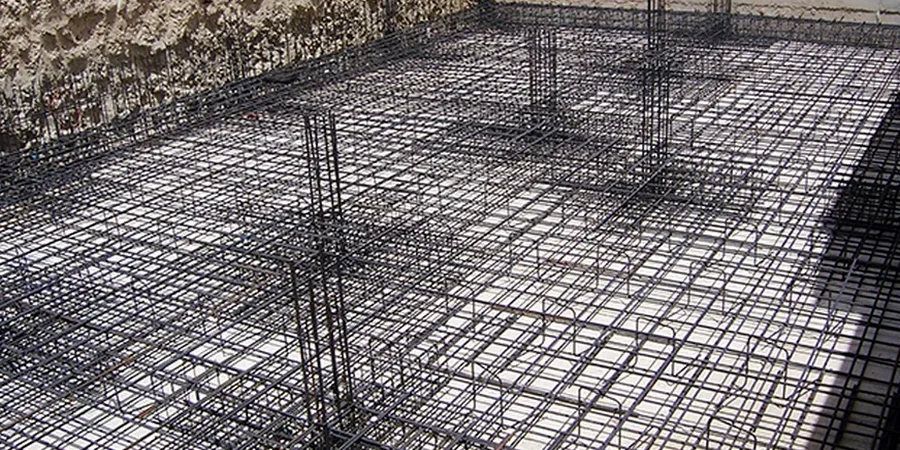
Critical ground factors in Cambridge Ontario
NBCC 2020 Sentence 4.2.4.1, combined with the geotechnical site classification requirements of Section 4.2.4.6, places a heavy compliance burden on Cambridge projects where Site Class D or E profiles are the norm. Failing to design the mat for the correct seismic site class—especially when soft clay extends below the 30-meter Vs averaging depth—can lead to underestimated spectral accelerations and unconservative base shear calculations. The second major risk is buoyancy. With spring groundwater levels rising within a meter of grade across much of the Hespeler and Preston areas, a raft foundation without proper sub-slab drainage and waterproofing becomes a permanent dewatering liability. We require a minimum 200-millimeter clear stone drainage blanket with perimeter collector pipes daylighting to a sump, and the underslab vapor barrier must be a 15-mil polyolefin membrane with taped seams. The third risk is concrete curling and shrinkage cracking in large-pour mats exceeding 600 square meters, which we mitigate through low water-cement ratios, Type GU with slag replacement, and early-entry saw cutting within 6 to 8 hours of finishing. These are not theoretical concerns—we have investigated three mat failures in Waterloo Region that traced back to missing drainage layers.
Our services
Our Cambridge raft foundation scope covers the full design-to-construction sequence, from geotechnical input parameters through reinforcement shop drawings. Each package is stamped by a Professional Engineer licensed in Ontario.
Geotechnical Parameter Derivation
We run CPTu soundings and selective boreholes to extract drained and undrained strength, consolidation properties, and subgrade reaction modulus specific to Cambridge's glacial stratigraphy.
Structural Mat Design
Full finite-element modeling of raft-soil interaction, including column punching shear checks, temperature and shrinkage reinforcement, and seismic load combinations per NBCC 2020.
Construction-Phase Monitoring
We install settlement plates, piezometers, and inclinometer casings beneath the mat during excavation, with weekly readings through the first six months of structural loading.
Peer Review and Value Engineering
Independent third-party review of existing mat designs, with alternative reinforcement layouts or thickness reductions where our CPT data supports higher soil stiffness.
Common questions
What does raft foundation design cost for a typical Cambridge commercial building?
For a commercial structure in Cambridge with a footprint between 400 and 1,200 square meters, the combined geotechnical investigation and structural mat design typically falls between CA$1,240 and CA$6,230. The spread depends on the number of CPT soundings required, whether we need a borehole with lab testing, and the complexity of the finite-element model. A single-storey retail slab with uniform loading sits near the lower end, while a multi-column office building with transfer beams and seismic detailing moves toward the upper range.
How do you determine the subgrade reaction modulus for a mat design in Cambridge?
We back-calculate the modulus of subgrade reaction from CPT cone tip resistance and sleeve friction data using established correlations from Robertson and Campanella, then cross-check with one-dimensional consolidation tests on Shelby tube samples from the compressible zone. For Cambridge's layered profiles—soft clay over till—we run a layered elastic half-space model in PLAXIS 3D or SAFE to capture the stiffness contrast between the upper clays and the dense till below. This avoids the oversimplified assumption of a single spring stiffness and yields much more accurate bending moment distributions.
What is the biggest mistake you see in mat foundations across Waterloo Region?
The most common and costly error we encounter is omitting the underslab drainage system. Cambridge's spring water table rises aggressively—often within a meter of the bottom of excavation—and without a properly graded clear stone blanket connected to a sump and pump, hydrostatic pressure builds under the mat. We have inspected mats that floated or cracked within two years because the designer treated groundwater as a trivial boundary condition. The second recurring mistake is using a single subgrade reaction modulus across the entire footprint when the soil profile changes laterally.