Cambridge sits on a complex glacial stratigraphy where the Grand River cut through layers of Halton Till, glaciofluvial sands, and silty clay deposits from the Paris Moraine. This means you can hit dense silty sand at three meters on one side of Franklin Boulevard and soft varved clay at the same depth two blocks east. When contractors send us bag samples expecting clean sand and we find 18% passing the No. 200 sieve, the foundation design parameters shift entirely. We run the full sieve stack plus hydrometer because skipping the fines fraction in this region is a gamble no geotechnical engineer wants to take. For projects near the river where liquefaction potential is a concern, the grain size curve becomes the first screening tool before any SPT-based assessment.
A grain size curve without the hydrometer portion is just half the story. In Cambridge tills, the clay fraction below 0.002 mm often controls the soil behavior more than the sand percentage.
Scope of work in Cambridge Ontario
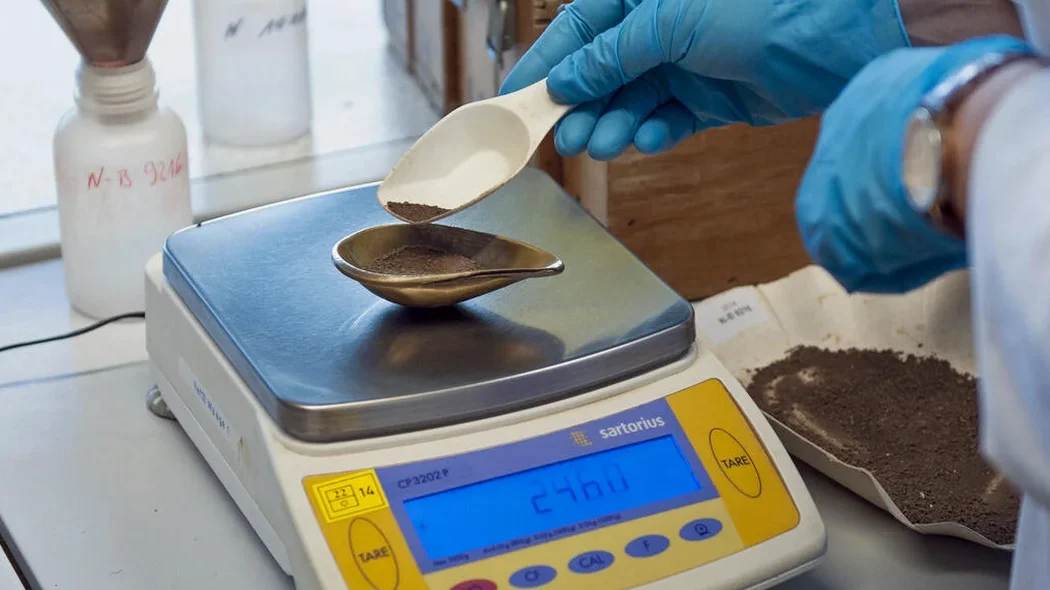
Field demonstration
Critical ground factors in Cambridge Ontario
The contrast between soils in downtown Galt and the newer industrial subdivisions near the 401 is stark. Galt sits on dense Halton Till with a well-graded matrix of sand, silt, and clay that gives you decent Cu values above 20 and Cc between 1 and 3, meaning the soil compacts well and drains moderately. But head east toward the Speed River floodplain and you encounter interbedded silts and fine sands with D10 values around 0.08 mm and uniformity coefficients below 6, which puts them squarely in the highly erodible category. A grain size analysis that misses these fine details leads to undersized drainage systems, clogged filter fabrics, or worse, a retaining wall backfill that traps water behind it. We have seen projects where the specification called for a well-graded sand with less than 5% fines, but the actual fill delivered was an SM with 22% passing the No. 200 sieve. The grain size curve told the story in black and white.
Our services
The grain size analysis we perform in our Cambridge lab covers the full spectrum from coarse gravel down to colloidal clay. Every report includes the complete gradation curve, the D10/D30/D60 parameters, coefficients of uniformity and curvature, and the USCS classification with group symbol and group name. Here is what we offer:
Full Sieve Analysis with Wash
Complete mechanical sieve stack from 3-inch down to No. 200 with pre-wash through the 75-micron sieve to remove fines. We dry and weigh every fraction, then calculate percent retained and percent passing at each sieve size.
Hydrometer Sedimentation Analysis
ASTM D422 hydrometer test using 152H hydrometer and sodium hexametaphosphate dispersant. Readings taken over 24 hours to capture the silt and clay fractions, with temperature correction applied at each reading interval.
Combined Gradation Report
Single graph merging sieve and hydrometer data into a continuous particle-size distribution curve. Includes D10, D30, D60, uniformity coefficient Cu, curvature coefficient Cc, and USCS classification per ASTM D2487.
Concrete Sand Gradation Check
Sieve analysis per CSA A23.2-2A to verify compliance with CSA A23.1 concrete sand gradation limits. We report the fineness modulus and check against both the upper and lower specification boundaries.
Common questions
How much sample do I need to send for a grain size analysis in Cambridge?
For soils with particles up to 3/4 inch, send about 500 grams in a sealed plastic bag. If the material has gravel up to 3 inches, we need at least 5 kilograms. Label the bag with the project name, borehole number, and depth interval. We can pick up samples from your Cambridge site if that is easier.
How much does a sieve analysis with hydrometer cost?
For Cambridge projects, a full grain size analysis including wash sieve and hydrometer runs between CA$130 and CA$220 per sample, depending on whether it is a simple sand check or a full combined curve with hydrometer readings over 24 hours. Rush turnaround adds a small surcharge.
Why do I need the hydrometer if I already have the sieve results?
The hydrometer measures the silt and clay fractions below 75 microns that the sieves cannot separate. In Cambridge tills and varved clays near the Grand River, the clay fraction can be 10 to 25 percent of the total sample. Without the hydrometer, you cannot calculate D10 accurately, which means the uniformity coefficient and the soil classification are incomplete.
How long does the hydrometer test take and can you rush it?
The standard hydrometer test runs for 24 hours because we need the final reading at 1440 minutes to capture the clay fraction settling. We offer a 24-hour rush service where we start the test immediately upon receiving the sample and deliver the report the next business day. The sieve portion can be completed the same day.