Geotechnical laboratory testing forms the backbone of any safe and cost-effective construction or infrastructure project in Cambridge, Ontario. This category encompasses the physical and mechanical analysis of soil, rock, and groundwater samples collected from a site to determine their engineering properties. From routine index tests like Atterberg limits to comprehensive grain size analysis (sieve + hydrometer), a qualified laboratory provides the data needed to classify soils, predict settlement, evaluate slope stability, and design foundations. In a city experiencing steady residential and industrial growth, the role of a local laboratory cannot be overstated—it ensures that design assumptions align with actual ground conditions, mitigating risk and preventing costly failures.
Cambridge sits within a geologically diverse region shaped by glacial activity during the Pleistocene epoch. Much of the city is underlain by glacial till, a heterogeneous mixture of clay, silt, sand, and stones deposited directly by ice. The Paris Moraine and spillways carved by glacial meltwater have left behind stratified deposits, including the sand and gravel aquifers that serve as vital groundwater sources. These complex soil profiles demand rigorous laboratory characterization. For instance, the presence of sensitive silty clays in low-lying areas near the Grand and Speed Rivers can pose challenges for excavation stability and bearing capacity, making precise determination of properties like plasticity and undrained shear strength essential for any geotechnical report.
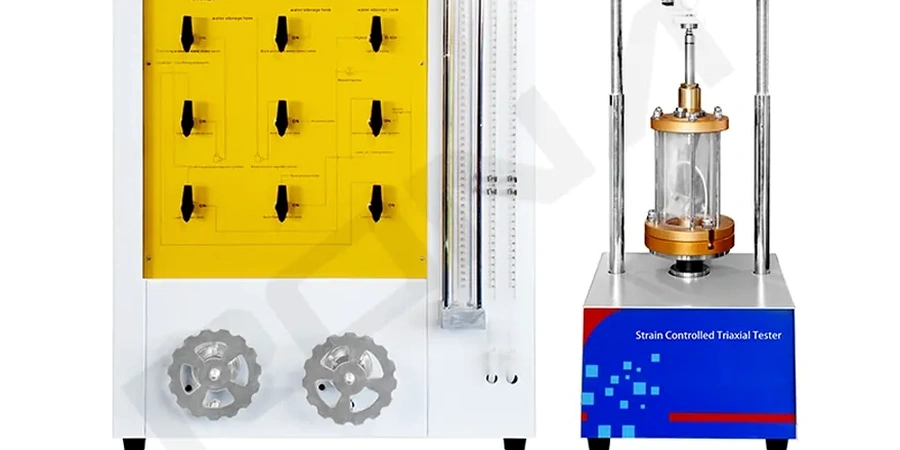
All laboratory testing performed for projects in Cambridge must comply with the Canadian Standards Association (CSA) and the Ontario Provincial Standards (OPS), which frequently reference ASTM International methods. The Ontario Building Code (OBC) 2012, with its 2024 amendments, mandates that foundation designs be based on a factual geotechnical investigation, which inherently relies on laboratory-derived parameters. Key standards applicable to routine testing include CSA A23.1/A23.2 for concrete aggregates and ASTM D4318 for Atterberg limits, ASTM D422 for particle-size analysis, and ASTM D2487 for the Unified Soil Classification System (USCS). Adherence to these protocols ensures that results are legally defensible and accepted by municipal building officials, conservation authorities like the Grand River Conservation Authority, and professional engineers overseeing the work.
The types of projects requiring comprehensive laboratory services in Cambridge are broad. Low-rise residential subdivisions need basic index testing to confirm bearing capacity and assess drainage characteristics. Multi-story commercial developments in areas like Hespeler or Galt often require advanced strength and consolidation testing to design deep foundations or mitigate settlement on compressible soils. Infrastructure projects, including road widenings along Highway 401 or sewer and watermain replacements, depend on grain size analysis (sieve + hydrometer) to select appropriate backfill materials and predict frost susceptibility. Environmental site assessments also rely on laboratory data to understand contaminant transport pathways through the soil matrix, linking geotechnical and hydrogeological models.
Common questions
What is the purpose of geotechnical laboratory testing for a construction project in Cambridge?
Laboratory testing determines the physical and mechanical properties of soil and rock samples recovered from a site. This data is essential for classifying soils, predicting how the ground will behave under load, and designing safe foundations, retaining walls, and pavements. In Cambridge, where glacial soils vary widely, testing confirms site-specific conditions that field identification alone cannot reliably provide, ensuring compliance with the Ontario Building Code.
Which laboratory tests are most commonly required for residential developments in Cambridge?
For typical residential subdivisions, the most common tests include natural moisture content, Atterberg limits to assess soil plasticity, and grain size analysis by sieve and hydrometer. These index tests allow engineers to classify the soil according to the Unified Soil Classification System and estimate drainage characteristics, frost susceptibility, and bearing capacity, forming the basis for foundation and servicing recommendations.
How do local soil conditions in Cambridge influence the selection of laboratory tests?
Cambridge's geology is dominated by glacial till, stratified sand and gravel deposits, and pockets of sensitive silty clay near the Grand and Speed Rivers. The heterogeneous nature of these deposits means a standard suite of tests may need to be expanded. For example, encountering soft clay might necessitate consolidation testing for settlement analysis, while coarse granular deposits require careful particle-size distribution to evaluate compaction potential and permeability.
What standards govern geotechnical laboratory testing in Ontario?
Geotechnical laboratory testing in Ontario is governed by a combination of national and international standards. The Canadian Standards Association (CSA) provides overarching frameworks, while specific test procedures typically follow ASTM International standards, such as ASTM D4318 for Atterberg limits and ASTM D422 for particle-size analysis. The Ontario Building Code mandates that designs be based on a factual investigation, which implicitly requires that laboratory work meet these recognized, auditable standards.