The Grand River valley shaped more than just the landscape around Cambridge—it deposited the complex stratigraphy that makes shallow foundation design here far from a textbook exercise. Glacial till, with its mix of silts, sands, and cobbles, overlies limestone bedrock at depths that vary dramatically between Preston and Galt, a reality that caught more than one rushed project off guard when the excavator bucket hit refusal three meters shallower than expected. A proper test pit investigation is the only way to map this irregular contact before the footings are drawn, especially now that Part 9 of the Ontario Building Code is being enforced more rigorously for infill lots. In our experience, the difference between a trouble-free foundation and a call-back starts with understanding which member of the Port Stanley Till you are actually building on.
In Cambridge's glacial till, the allowable bearing pressure is not a single number—it is a function of the silt content, the water table elevation, and the proximity to the bedrock surface.
Scope of work in Cambridge Ontario
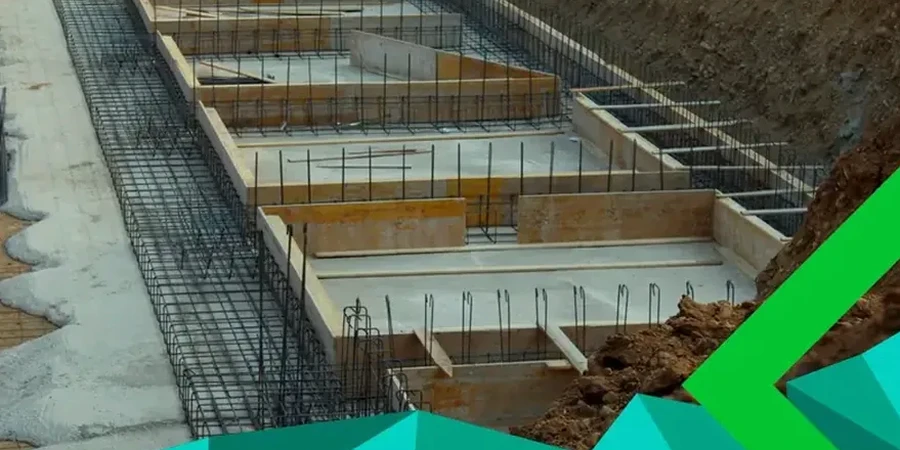
Critical ground factors in Cambridge Ontario
Cambridge's industrial legacy, from the old textile mills along the Speed River to the foundries that built the city's working-class neighborhoods, left behind pockets of fill that are often undocumented on municipal maps. Urban infill projects in the Galt core frequently encounter a meter or more of mixed ash, brick fragments, and organic debris right where the new footing needs to bear, and discovering that during excavation—without a prior geotechnical investigation—triggers an immediate stop-work order from the city's building department. The cost of a redesign and a deeper excavation, compounded by the delay while the concrete contractor is on standby, makes the upfront investment in a targeted drilling and sampling program look like the most rational line item in the entire project budget.
Our services
From the initial borehole layout to the final signed Schedule B letter, the shallow foundation design process we follow in Cambridge is built around three core technical services that align with the requirements of the local building department and the expectations of the structural engineer of record.
Geotechnical Site Investigation and Bearing Capacity Analysis
We mobilize a track-mounted drill rig to advance SPT boreholes at the proposed foundation locations, typically to a depth of at least 1.5 times the footing width below the bearing elevation. Each split-spoon sample is field-logged by a geotechnical engineer who identifies the till facies, records the N-value, and selects undisturbed Shelby tube samples where cohesive layers require consolidation testing. The bearing capacity analysis follows the general shear failure equations from the Canadian Foundation Engineering Manual, with a factor of safety of 3.0 applied to the ultimate bearing pressure.
Settlement Monitoring and Mat Foundation Optimization
For Cambridge sites where the bedrock profile slopes steeply across the building footprint, we perform a differential settlement analysis using the Schmertmann method for the granular till layers and one-dimensional consolidation theory for any interbedded silt seams. The output is a contour map of predicted total and differential settlement that allows the structural engineer to decide whether a conventional footing system is feasible or whether a mat foundation with variable thickness is required to stiffen the structure and distribute the load more uniformly.
Construction-Phase Inspection and Bearing Surface Verification
Once the excavation reaches the design bearing elevation, our field engineer visits the site to confirm that the exposed soil matches the conditions assumed in the geotechnical report. A hand penetrometer test and a visual classification check are performed, and any soft spots or fill pockets are mapped for removal and engineered backfill. The final bearing surface is documented with photographs and a field memo submitted to the building inspector, closing the loop between the geotechnical recommendations and the concrete pour.
Common questions
What is the typical allowable bearing pressure for a strip footing in Cambridge's glacial till?
For a strip footing founded at least 1.2 meters below grade in intact Port Stanley Till with an average SPT N-value above 15, the allowable bearing pressure typically falls between 150 and 250 kPa at the serviceability limit state, assuming a maximum total settlement of 25 mm. Where the till contains a higher silt fraction or the water table is within the influence zone, the value is reduced to between 100 and 150 kPa to keep differential settlement within tolerable limits for masonry superstructures.
How much does a shallow foundation design investigation cost in Cambridge?
For a typical single-family residential lot or a small commercial building in Cambridge, the complete geotechnical investigation—including two to three SPT boreholes, laboratory classification testing, and a foundation design report with bearing capacity and settlement recommendations—ranges from CA$2,640 to CA$4,430, depending on access conditions, bedrock depth, and whether groundwater monitoring is required over multiple seasons.
Do I need a geotechnical investigation for a house foundation in Cambridge, or can I rely on the Ontario Building Code prescriptive tables?
Part 9 of the Ontario Building Code permits prescriptive foundation design for certain small buildings on competent soil, but the city of Cambridge's building department increasingly requires a geotechnical report for any new construction on previously undeveloped land, on lots within the Grand River floodplain, or on infill sites where historical fill may be present. The report confirms that the actual soil conditions match the assumptions behind the prescriptive tables, which is not something a visual inspection at the excavation stage can reliably verify.
How long does the design and reporting process take from the first site visit?
The field drilling and sampling work for a typical Cambridge residential or light commercial site is completed in one day. Laboratory tests on the recovered samples, including grain size analysis and Atterberg limits, require approximately five to seven business days. The foundation design report, with bearing capacity calculations, settlement estimates, and construction recommendations, is delivered within ten business days of the field work, and a preliminary verbal recommendation is provided within forty-eight hours if the excavation schedule is urgent.